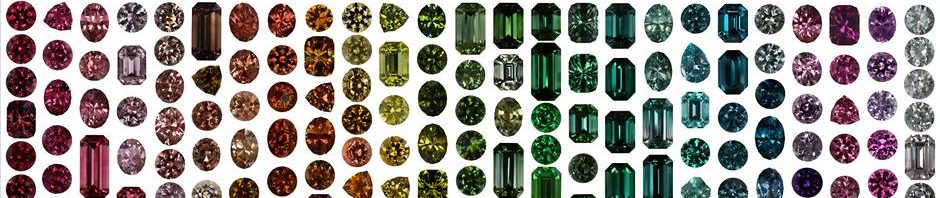
I just had a great conversation with a women who is actively buying large numbers of faceted paraiba type tourmaline. She had just purchased a beautiful gemstone that turned out to a Laurellite and wanted to discuss it with me. Laurellite is a name I have given to a new variety of tourmaline from Mozambique that displays a reverse Alexandrite color change.
As we talked about Laurellite it became obvious that she had to deal with a massive amount of “clarity enhanced” paraiba, besides seeing many paraiba type gemstones that are misidentified. Sometimes misidentification is to her advantage while most of the time it just leads to more trips to the GIA laboratory in Carlsbad CA and cost. More difficult than identification of the gemstones is the nearly universal use of oils and epoxies to enhance the clarity of the paraiba type gemstones.
This is not surprising to me since Mozambique never produced a large percentage of eye clean stones and the heating requirements, with many stones, to produce the desired cyan blue color, incurs a significant risque of damaging the stone. I don’t buy faceted stones because I cut everything I have in the collection so I have not personally run into a problem with clarity enhancement. I also don’t heat or clarity enhance anything I have because I want to collection as natural a gemstone as I can get. Still I realized that some rough is routinely heat and not disclosed. (I think that the blues from Namibia and pinks from Brazil are the must suspect when it comes to heating. Irradiation may also be a factor in Brazilian rough) These cases are the exception with tourmaline because it is usually safer to heat tourmaline after it has been faceted/preformed rather than have the surface inclusions/flaws originate damaging fractures.
Our discussion ended with reinforcing my contention that all significant gemstones designated as cuprian, a broader range of colors than paraiba like, paraiba type and Paraiba, should be tested in a qualified laboratory. I purchased a spectrometer to test my collection and I was quite surprised by the number and variety of tourmalines that I found to contain significant amounts of copper. There is no doubt that the beauty of cuprian tourmaline is a major reason for the existence of this web site.
Bruce
