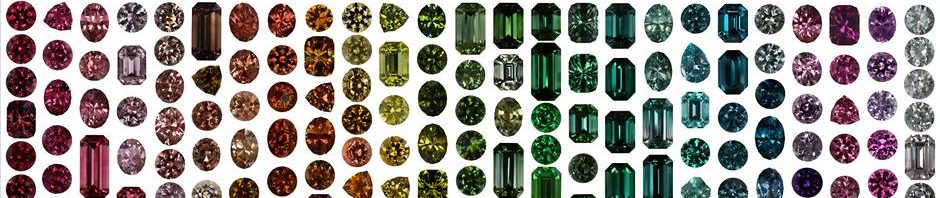
Paraiba tourmaline and the broader family of cuprian tourmaline has certainly been a driver for interest in the provenance of gemstones. The price differential between Brazilian with the proper levels of tone and color and similar African cuprian tourmaline is substantial. Unfortunately the quality of Brazilian cuprian tourmaline does not always justify the differential.
This post is not an attempt to compare the best that was produced in Paraiba and Mozambique, they both have their relative merits, but an attempt to deflate the idea that ALL Paraiba from the original source is superior material, The small deposit that produced the original Paraiba has produced a significant amount of more common low grade tourmaline that does not fit the defined definition for hue/color, tone or saturation and are easy to keep out of this discussion. The cuprian tourmaline from Paraiba that may meet the technical qualifications as Paraiba, but lacks the “neon” brightness are the subject of this post.
In broader terms, any cuprian tourmaline that lacks the exception property of being “Neon” does not deserve the premium asked for Paraiba or paraiba type gemstones no matter where they originated from. And I don’t believe that the gemological laboratories have developed a way to chemical separate similar cuprian tourmaline that has a “neon glow” property from one that does not. At the present, only the human eye/mind can truly see the “neon glow”.
Since the “neon glow” is perceived property of the human eye, it is really not able to be photographed. The pictures turn out to look over exposed in my opinion. And since science has failed to chemical define the critical differences between cuprian tourmaline from any location that makes one gemstone “neon” and another one not, we are left with a very confusing and difficult situation. Color/hue for Paraiba and the broader family of cuprian tourmaline has been extorted as unique in tourmaline and I think that some shades are, but not the top color of cyan (windex blue, electric blue etc.)
To make a reasonable decision about the purchase of a cuprian tourmaline you must go beyond the provenance of the gemstone and even the traditional color properties of the gemstone to the ” neon glow”. It is that property of high quality cuprian tourmaline that deserves the price. If you only want a nice cyan colored tourmaline at a much more reasonably price, I would purchase an iron colored paraiba like tourmaline that would probably originate from Afghanistan/Pakistan. It does not have visual impact of comparably colored cuprian in my opinion, but it does have the hue/color.
As an example in tourmaline of the importance of the “neon glow” outside of the cuprian world is a group of iron colored yellow green/blue green named “sea foam” that usually originate from Afghanistan. This is an old designation and it covers many grades of tourmaline that have only a modest difference in tone value between their axis of moderate tone level. This makes for a beautiful mixing of their colors in the finished gemstone when properly cut. Be this as it may, the most important factor in the cost/beauty of the gemstone is probably the “glow” factor. It is an amazing experience to see a mixture of high grade sea foam with a strong “glow” factor and more common unresponsive sea foam respond to the fading of an incandescent/natural light mixture. The common sea foam just goes to sleep/darkens as you would expect, while the “glowing” high quality sea foam seems to have a light source inside. This is despite their tone values and hues being relatively close together. Despite the glowing properties of blue/green to blue iron colored tourmaline, they do not have the visual impact of a fine cuprian tourmaline regardless of the color. Again, the key word is “fine” because it implies a “glowing” property that cuprian must have to be worth the praise and cost.
Bruce
