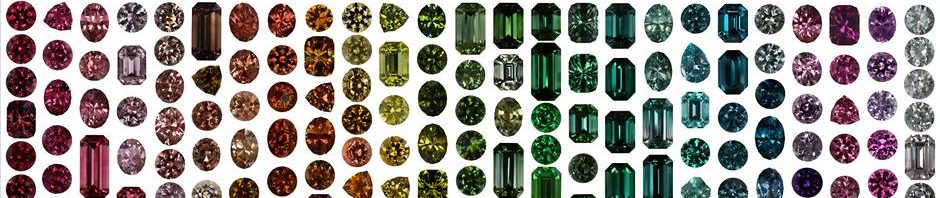
I have been a bit busier than usual talking with a well positioned gem expert on the property of reverse alexandrite color change in cuprian tourmaline from Mozambique. By reverse I mean that “Laurellite” the name I have given the cuprian color changer from Mozambique, appears to be a warmer color (violet) in the cool natural light of day and a cooler color (blue to blue green) in the warm reddish glow of an incandescent light.
I presented the reverse color change as unique to “Laurellite” in the gemstone world. The authority contended that, while he did not know of any other gemstone with a reverse color change, he would only designate the property as very rare not unique. The logic for this decision went like this. Even though I do not know of any other gemstone with a reverse color change, it is not logical to think that the phenomenon could be unique. I have not response to such a statement, but I will continue to designate the reverse alexandrite color change in “Laurellite” as unique in the world of gemstones.
One good note was that the lab has been seeing quite a few specimens of “Laurellite” recently. (It is still a very rare gemstone) Maybe my message is getting out that Laurellite has a unique beauty and value, that heating it to reduce the manganese and create a neon blue gemstone destroys.
As a final note that has a wider importance than only gemstones. The endless repeated, traditional theory of color change, with ruby, alexandrite and emerald as the example, can not be the whole truth. The traditional theory briefly goes like this. The differences in the distribution of color in the illuminating light causes a color change in the gemstone that is in the same direction as the strongest part of the color of the light source. Laurellite and its reverse color change demands a reappraisal and modification of the theory. This is because the theory can NOT explain the reverse color change in Laurellite. Laurellite is the “smoking gun” that shoots holes in the traditional theory and the word should get out. It is a scientifically important development.
Bruce
