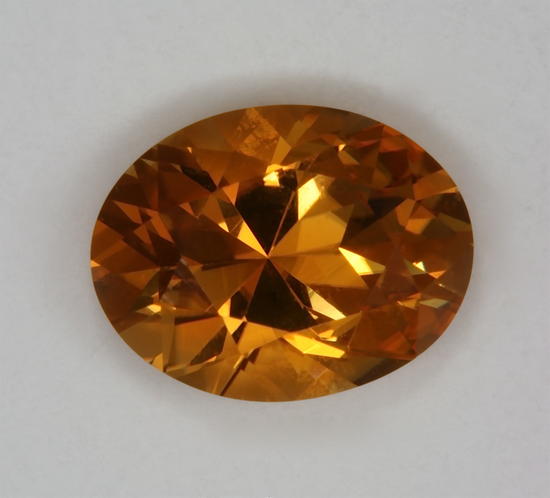
 The post for this golden stone is combined with its neighbor in the tray. This 1.34 carats oval is eye clean and bright and flash with minimal brown.
This is #259 and is piece of bright golden eye candy
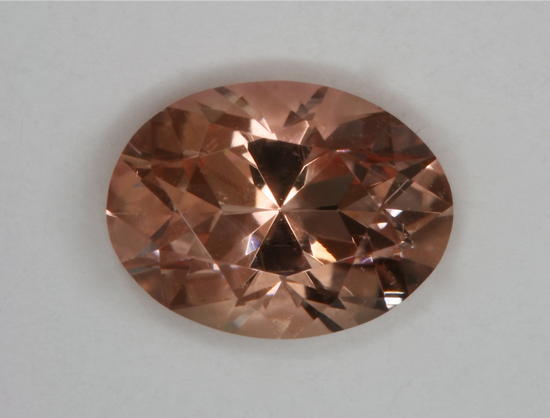 This smaller oval (# 260)is posted with its neighbor (#259) in the tray. It is a darker gem that is dominated by brown, but with a nice bright flash. It appears to be eye clean.
This is #260 and is a dravite with golden flash.
I am going to post one comment for both of the next two stones in the tray. My son organized the early trays of the collection, after I had done the last Gem and Mineral show at the Carnegie Museum in Pittsburgh Pa, so I am not guilty of setting up a didactic show with these gems. It just happen to work out that way.
The first smaller oval in this post is a great little stone. It is of a medium tone level and appears to be eye clean, but that is not what catches the eye. The gemstone is eye candy. Its wonderfully light golden, verging on yellow, color literally bounces around the stone and flashes out a greeting to all. It weighs 1.34 carats.
Its neighbor is also a smaller oval of somewhat darker tone level and it also appears to be eye clean, but that is not what catches the eye. The flash is roughly as bright gold as its neighbor, reviewed above, but everywhere the stone is not flashing, the body of the gem is brownish. This makes the stone so much heavier than its light, playful, sibling. I can still appreciate the oval, but it needs a much closer examination to feel its beauty. It weighs 1.07 carats.
I love the world of color in tourmaline. So much is going on in a tiny golden crevice, in its mountain of color, that reaches beyond any other gemstones height in my opinion.
Since I have an opening, I will comment a little about color nomenclature in tourmaline. I have golden on both storage boxes of these small ovals, but they are very different. After working with tourmaline for a while I would get much more out of golden for the first gemstone and dravite for the second stone. I think that you can make the same kind of argument for Rubellite and Indicolite etc. (two traditional trade names)as distinctly different that just red and blue. In other words color in tourmaline is too complex and vast to be simple distilled into basic generic colors. If course you could turn to longer phrases to describe the tourmaline’s color, but that really doesn’t have the impact of a finely tuned name.
Bruce
