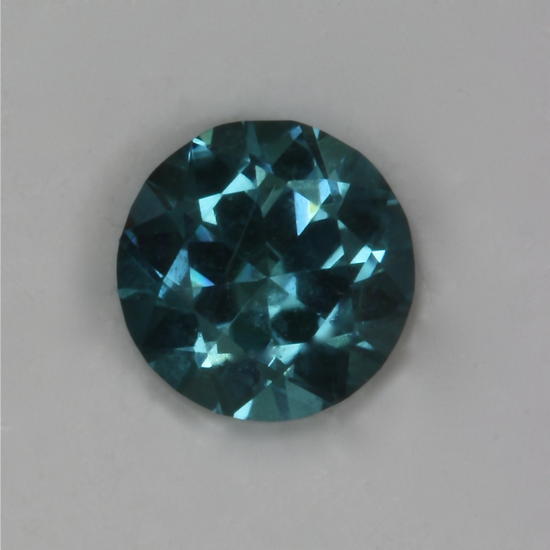
 This small standard round brilliant is from Namibia and weighs .21 carats. Color is the name of the game in such a small gemstone and this has a beautiful blue color.
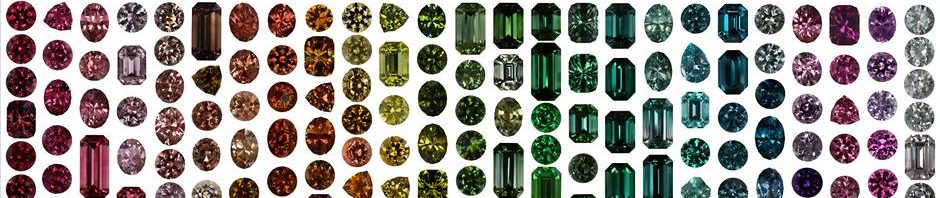
The blue gemstone pictured above is an example of sort of a subset of “color droplets” (which consist of standard round brilliants in as many colors etc. that I can get). I have quite a few of them and they all come from Namibia, so they deserve some separate space.
Blue without green in tourmaline is rare and any blue with a purple cast rarer still. Many Indicolite, a trade name for blue tourmaline that is used too often with gems that are too greenish, are strongly dichroic and produce a darker gemstone. The small pieces of Namibian rough that cut the example above are not bother by any weakness in the color or tone area. They are some of the best blues in the world, but they do have physical problems. The problems may come from being heated. Generally I don’t think that tourmaline is heated if the surface of the rough is not ground. Surface imperfections and heating tourmaline don’t go together and can lead to a high percentage of fractured rough. But I know that Namibian blues a routinely heated in the rough state. Well the last lot I got of the pretty little blues produce stones that fell apart and spontaneously fractured in a 5mm stone or smaller. Not too common in rough that I have cut.
